
Why Flight Prices Are Rising in 2026 (War Impact Explained)
Updated on 16 June 2026 — This article now includes the latest Iran–US diplomatic developments and their impact on global flight pricing.
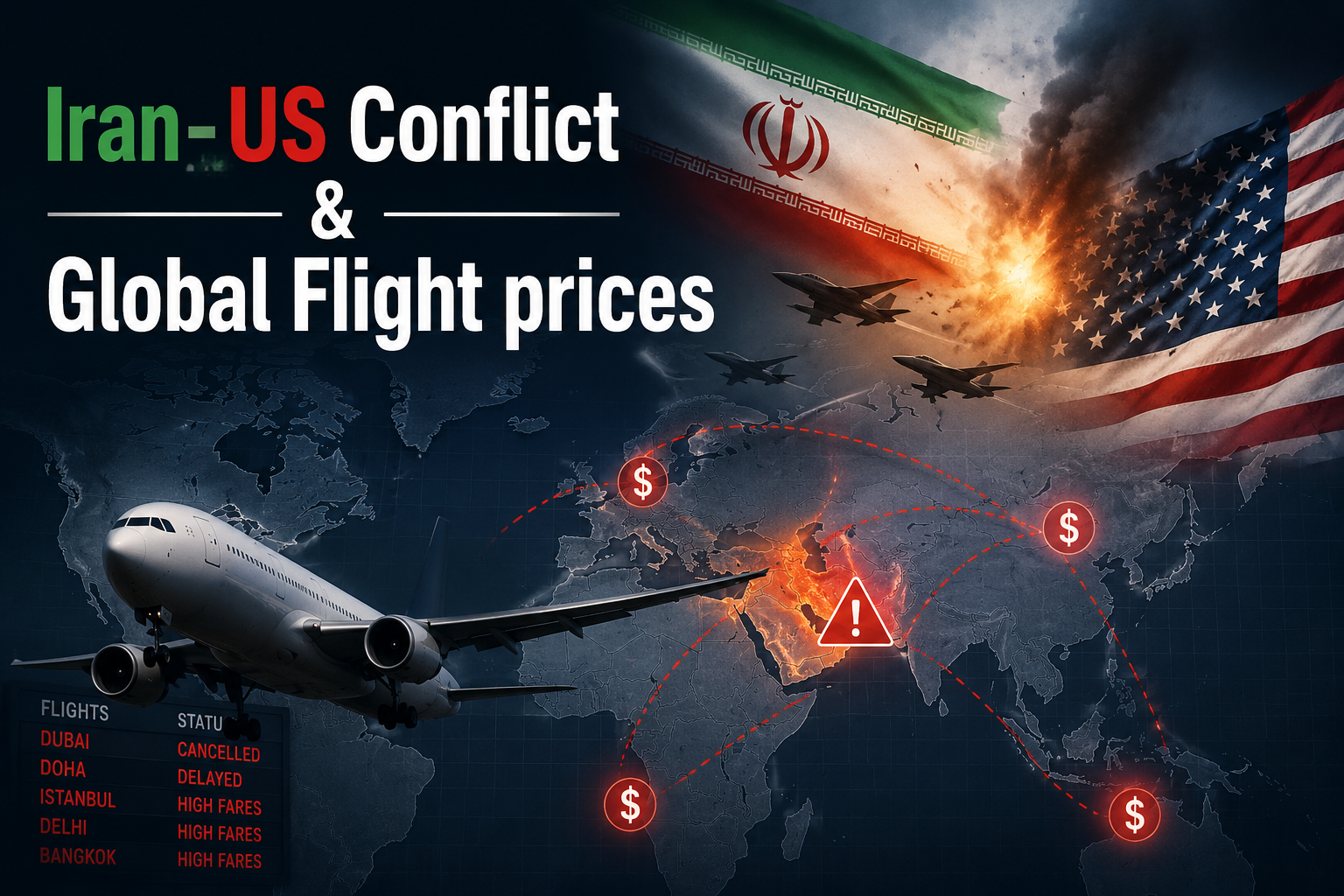
The ongoing conflict involving the United States, Israel, and Iran has had widespread effects—extending far beyond geopolitics into the global aviation sector.
Update (June 2026): On 15 June 2026, a preliminary memorandum of understanding (MoU) was reportedly signed between Iran and the United States aimed at de-escalating regional tensions. Markets are now closely watching Friday, 19 June 2026, when a more formal agreement is expected to be announced, which could directly influence airspace reopening and aviation stability across the Middle East.
As key airspaces in the Middle East closed due to escalating tensions, airlines were forced to reroute flights, increase operations costs, and pass those costs on to passengers.
What Happened to Airspace and Routes
Recent Diplomatic Shift (June 2026) and Market Reaction
The aviation market has started reacting to a major geopolitical development: the 15 June 2026 MoU between Iran and the United States, which signaled a potential easing of tensions in the region.
If the expected formal agreement on 19 June 2026 is confirmed, analysts believe it could trigger a phased reopening of restricted airspace across parts of the Middle East, especially over key transit corridors linking Europe and Asia.
Airlines and investors are already pricing in this possibility. While rerouting costs remain high for now, forward-looking flight pricing models have become more volatile, with some carriers cautiously adjusting long-haul fares in anticipation of reduced detours.
Potential partial reopening of key air corridors could reduce flight times on Europe–Asia routes.
Oil and jet fuel markets may stabilize if geopolitical risk premiums decline.
Airlines could gradually unwind emergency fuel surcharges if stability holds.
Historical Perspective of Middle East Conflict 2026 & its impact it made on Flight prices
After major strikes in late February 2026, multiple countries including Iran, UAE, Qatar, Kuwait, Bahrain, and Iraq closed airspace for civilian flights. This effectively cut off one of the busiest aviation corridors in the world, which normally connects Europe, Asia, and Africa.
With these closures, flights had to take long detours, increasing fuel consumption and adding time to routes. Some airlines even suspended services to key Middle Eastern hubs, further disrupting global schedules.
Looking for cheap flights right now? Try our flight comparison tool.
Why Flight Prices Are Rising
Two main economic forces have driven up international flight prices in recent months, although the situation may begin shifting if the June 2026 diplomatic developments lead to de-escalation:
Jet fuel costs soared as the war disrupted energy markets, with global oil prices rising sharply due to instability around the Strait of Hormuz.
Airlines face higher operational costs, including longer routes, flight cancellations, and rerouting, which forces carriers to increase ticket prices and add fuel surcharges.
What It Means for Travelers
Passengers around the world are already feeling the impact, although some airlines are beginning to factor in potential route normalization following recent diplomatic progress in June 2026.
More expensive airfare, with some carriers increasing fares by up to 20% or more.
Flight cancellations or reroutes, adding travel time and logistical complexity.
Higher fuel surcharges as carriers try to pass rising costs to customers.
Understanding the Data: Flight Price Trend (Graph)
📈 International flight price trends over the past 3 months showing sharp increases after February 2026 conflict escalation.
This graph visualization can help visitors quickly understand how prices changed relative to geopolitical events. Later, you can link this with real data sources or APIs.
Summary
The Iran–Israel–US conflict has disrupted global aviation in multiple ways, although recent diplomatic developments in June 2026 may begin to shift the outlook:
Airspace closures have forced reroutes, cancellations, and longer flight paths across major Europe–Asia corridors.
Fuel prices surged earlier in the crisis due to instability in the Middle East, significantly increasing airline operating costs.
Ticket prices on international routes increased as airlines passed on higher fuel and operational costs to passengers.
A 15 June 2026 MoU between Iran and the United States has introduced early signs of de-escalation, with markets now watching the expected 19 June 2026 agreement for confirmation of a more stable phase.
For travelers, this means continued caution in the short term—expecting volatile fares and route changes—but also potential gradual relief if airspace restrictions ease following diplomatic progress.
As geopolitical conditions evolve, so will global travel patterns and pricing dynamics. Staying aware of both conflict developments and diplomatic breakthroughs can help travelers make more informed and cost-effective booking decisions.